Alcohol remains one of the number one known factors in boating accidents across America, accounting for over 17% of the fatalities that happen on boats in the most recent Coast Guard report. It is expected that around peak holiday weekends like Spring Break, Memorial Day, and Fourth of July, people take more risks on average than regular spring and summer weekends.
Georgia DNR(Department of Natural Resources) officers frequently increase patrols during holiday weekends to target impaired boating, reckless operation, and other dangerous behavior that can quickly turn a day on the water into a tragedy. As a result, law enforcement agencies often report spikes in DUI, more accurately referred to on the water as BUI (Boating Under the Influence), arrests during these busy periods, particularly on crowded lakes like Lake Lanier.
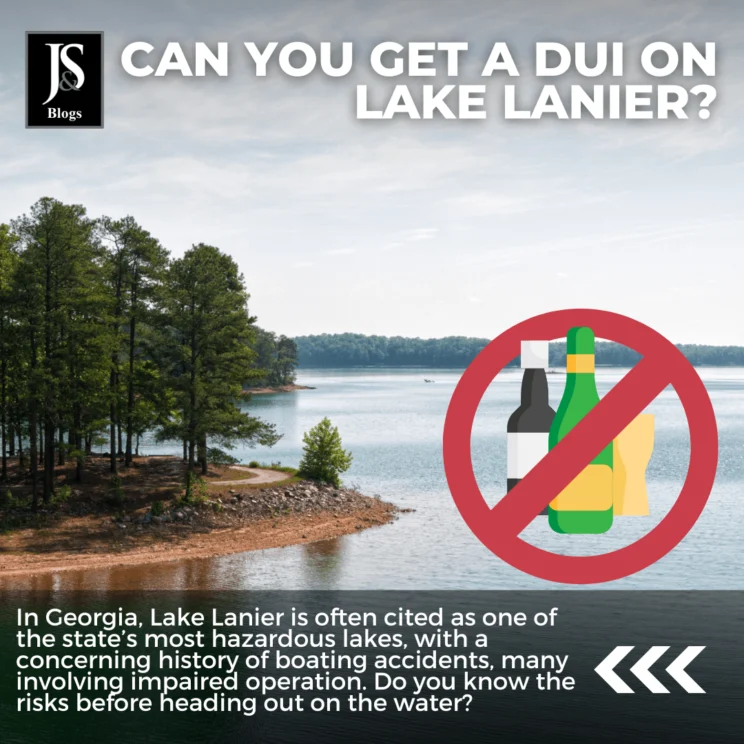
At home in Georgia, many of us locals know Lake Lanier as one of the state’s most dangerous lakes, and, in some reports, it has even been ranked among the deadliest lakes in America. In 2023 alone, 13 fatalities occurred at Lake Lanier. This is due to several factors, including poor visibility, high traffic, unseen obstacles, and, of course, alcohol fueled patrons.
WHY IS LAKE LANIER SO DANGEROUS?
The history of Lake Lanier is extensive since it is not a naturally occurring lake. Lake Lanier is actually a man-made reservoir created by the Buford Dam on the Chattahoochee River. In the 1950s, the U.S. Army Corps of Engineers flooded a massive 56,000 acres of land that had once housed hundreds of families. The purpose of flooding the old community was to help provide flood control, power generation, and water supply for the city of Atlanta. Unfortunately, in an effort to be more cost-effective, many structures like buildings, roadways, and trees, were not demolished before the lake’s creation.
Now, compound this with the poor visibility of the water of Lake Lanier itself. The erosion of local red clay mixed with algal blooms that are then agitated by boating traffic and heavy rains gives Lake Lanier its notable murky-brown appearance. This leads to patrons not being able to identify hazards under the water’s surface, damaging boat engines, and snagging on swimmers’ clothes and limbs.
But, it doesn’t end there; mix these already deadly features with the overall popularity of the lake and accessibility of drinking-related activities, such as Margaritaville, and you now have one of the largest culprits for boating tragedies in America.
HOW CAN YOU GET A DUI ON LAKE LANIER?
Lake Lanier, like any other lake in Georgia, has strict enforcement around alcohol consumption and operating boating vehicles while under the influence.
The Georgia Boat Safety Act prohibits boating or operating any personal watercraft under the influence of alcohol. This includes any boat, sailboats, sailboards, surfboards, jet skis, and similar personal watercraft (Georgia Code § 52-7-12).
The best way to prevent injury or death is by adopting a zero-tolerance policy for drinking and driving, and just like any other vehicle, you must exercise caution when operating.
Know The Law
- Georgia DNR Law Enforcement does not need reasonable suspicion to stop a boat for a safety inspection.
- Operating a boat while intoxicated is a federal offense, subject to:
- Up to a $1000 fine.
- Possible prison time up to one year.
- Loss of privileges to operate a boat.
- If there is a child under the age of 14 aboard, the driver will also be found guilty of child endangerment.
SAFETY AROUND DRINKING AND BOATING
If you intend to visit Lake Lanier and indulge yourself in drinking or just hanging out, there are some things you should know and do to keep yourself and those around you safe:
Never Drink and Operate a Boat
- Every ounce of liquor (one standard beverage) takes your liver one hour to process. You should never operate a boat under the influence.
Plan Ahead
- If you plan to drink, be sure to bring along a designated driver who is allowed to operate a boat, which means they pass the following requirements:
- Age: Anyone born on or after Jan 1, 1998, must pass a Boat Ed course.
- Exemptions: Those born before Jan 1, 1998, do not need a license but must have proper identification.
- Non-Residents: Visitors from other states with a NASBLA-approved boating safety certificate are compliant.
- Kids: Children under 12 cannot operate a personal watercraft or boat greater than or equal to 16 ft; those 12–15 may operate vessels less than 16 feet if they have passed the course and are with a competent adult.
Know The Risks
- Intoxicated people are more likely to fall overboard. It is crucial that there is a sober individual aboard to stay aware of the situation.
- Every person must wear a life vest, especially those who are intoxicated. Drowning accidents can increase due to a limited number of sober individuals.
Watch Out For Others
If you notice someone operating a boat while intoxicated:
- Keep a safe distance and alert authorities to the vessel’s whereabouts. It is important to contact Georgia DNR Law Enforcement:
- Call 911 → they will route you to the nearest DNR ranger → provide details and direction → let the professionals handle it and keep your distance!
If you notice the captain of your boat is intoxicated:
- Quickly ensure that everyone aboard is wearing a life vest.
- If you are capable of driving the boat with proper certifications as stated above, politely request to take control without confrontation.
- If you are incapable of driving the boat, quietly encourage everyone to sit down and encourage the driver to slow down and dock the vessel.
- If you are close with the driver, remind them of the consequences of being charged with a DUI/BUI.
What to do if you are on board a boat during an accident:
- Bring the boat to an immediate stop: It is illegal to leave the scene after a boating accident (Georgia Code § 52-7-14).
- Help others: check if anyone fell overboard and assist them back on the boat.
- If the boat is sinking and you are stuck in the water:
- Attempt to reach life vests for you and other passengers, but do not go below deck.
- Turn off the engine.
- Call for help using 911.
- Once fully submerged, hold onto the floating debris or floatation devices.
- Conserve energy by floating on your back.
- Wave and make yourself known to passing boats with flashlights and whistles.
- Seek medical assistance: shock can often mask symptoms, such as internal bleeding or concussions, so it is vital to visit a doctor after the accident.
- Contact Jones & Swanson for a FREE consultation and see if you have a BUI/DUI boating accident case.
WHAT IS THE LEGAL LIMIT BEFORE A DUI OR BUI ON WATER?
HOW MANY DUIS OR BUIS HAPPEN ON LAKE LANIER PER YEAR?
ARE OPEN CONTAINERS ALLOWED ON LAKE LANIER?
You can have open containers of alcohol on a boat on Lake Lanier, as Georgia does not have an open container law for vessels.
What do I do after a boating accident on Lake Lanier?
If you have been involved in a boating accident, your #1 priority is to get the medical care you need and return to your daily life with as little change as possible. Unfortunately, many factors can complicate seeking compensation after an accident. It can be difficult to maintain your well-being while navigating the insurance process.
This is why seeking proper and experienced legal care is vital in the event you are a victim of a boating accident. Our team at Jones & Swanson has a combined 50 years of legal experience helping victims through a variety of boat, car, and trucking accidents, and we are more than ready and able to listen to your case.
Jones & Swanson can help connect you with medical providers, assist you with your insurance claim, and obtain the highest compensation available following your accident. Our boating accident attorneys in Cobb have won over $50 million in settlements and court verdicts for victims in Georgia. We’re here to listen to your story and create a boating accident claim that suits your needs.
JONES & SWANSON IS A PERSONAL INJURY FIRM, Located in Marietta and CARTERSVILLE, Georgia. IF YOU OR SOMEONE YOU KNOW HAS BEEN HURT DUE TO THE NEGLIGENCE OF OTHERS WHILE ON A BOAT, SEEK IMMEDIATE MEDICAL ASSISTANCE, THEN GIVE US A CALL AT (770) 580-1085 OR CONTACT US ON AWJLAW.COM FOR A FREE CONSULTATION TO FIND OUT THE NEXT STEPS YOU MAY WANT TO TAKE.
Categories: Boating Accidents, Catastrophic Injuries, Drunk Driving, FAQ, Personal Injury, Premises Liability, Safety Tips, Summer Safety