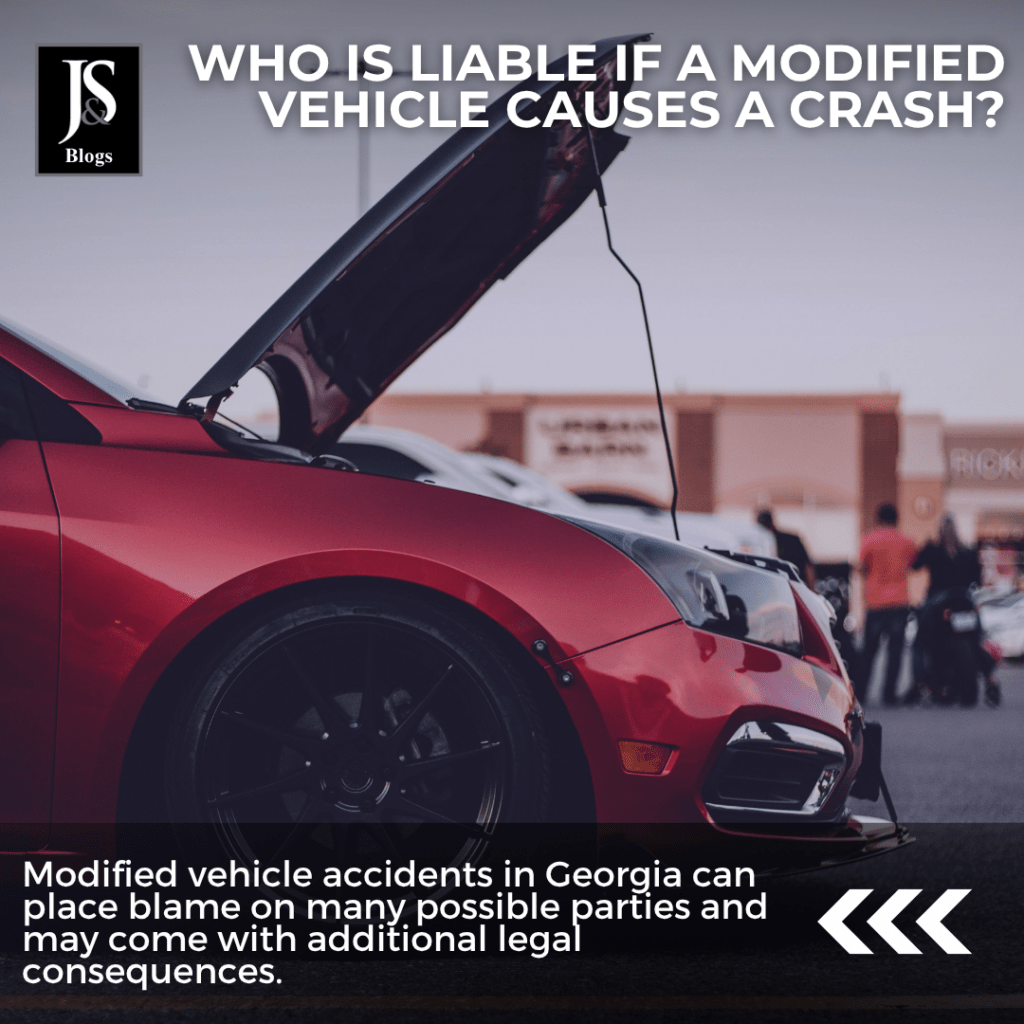
Millions of drivers in Georgia have modified their cars to upgrade performance, improve the look, or alter the way they drive. Many modifications are completely safe, with most being purely cosmetic, but there are instances when a modification on a vehicle increases the risk of a car accident. Because of this increased risk, modifications can complicate a personal injury case after an accident.
Modifications Can Increase Crash Risk
Many vehicle modifications are purely cosmetic and do not affect a car’s performance at all. Other modifications can change the way a vehicle drives, raising safety concerns.
- Suspension lift kits can raise the vehicle’s center of gravity and increase the risk of a rollover accident
- Oversized tires can affect braking distance
- Aftermarket lighting may blind other drivers or reduce visibility
- Window tint that is too dark can reduce the driver’s ability to see hazards
- Performance upgrades that affect the engine or brakes.
Who Can Be Held Responsible?
The Driver:
If a driver causes a crash while driving a car with dangerous or illegal modifications, they can be held responsible for the injuries they caused. The modification itself doesn’t have to break the law; it just has to be a factor that contributed to the crash.
The Vehicle Owner:
At times, the person who owns the vehicle is not the driver who causes the accident. Under Georgia’s negligent entrustment doctrine, an owner can be held liable for lending a vehicle to someone they knew was incompetent to operate it. They may be considered a liable party, even if they aren’t in the vehicle at the time of the accident.
The Repair Shop:
A shop or mechanic who installed a modification incorrectly may share liability for:
- Improper installation of lift kits or suspension parts
- Failure to warn of known risks
- Installing illegal equipment, such as non-compliant lighting
- Modifications that created a mechanical failure
The Parts Manufacturer:
If the accident was caused by a defective aftermarket part, the manufacturer of that part could be held liable under Georgia’s product liability laws. This applies when a part was designed poorly, manufactured incorrectly, or sold without proper warnings of the risks.
Shared Fault Under Georgia Law
Georgia follows a modified comparative negligence rule under O.C.G.A. § 51-12-33. This means more than one driver, including the injured party, can share the fault in an accident. As long as the injured person is found to be less than 50% at fault, they can still recover compensation. Their final payout will be reduced by their percentage of fault.
This rule is particularly important in modified vehicle accidents because insurance companies often try to shift more fault onto a driver because of their car’s modifications. They do this so they can pay less in compensation. An attorney can make sure the insurance companies are not overstating your percentage of fault, protecting your claim, and helping you recover the compensation you deserve.
Why These Cases Can Be Complicated
Sometimes modified vehicle accidents require more examination than a typical accident claim because these cases can involve multiple potentially liable parties. Attorneys may need to look at:
- Inspection and modification records.
- Repair shop invoices.
- Expert mechanic testimony on modification installation and how it affected vehicle performance.
- Maintenance history before and after the modification.
What to Do After a Crash Involving a Modified Vehicle
If you were injured in a crash involving a modified vehicle, whether it was your vehicle, the other driver’s, or both, take these steps to protect your claim:
- Call 911 and have the police come to the scene to write an accident report.
- Seek medical attention quickly, even if your injuries seem minor at first.
- Take photos of both vehicles, including any visible modifications.
- Collect contact information of any witnesses.
- Avoid discussing who is at fault with the other driver or their insurance company.
- Contact an experienced personal injury attorney before accepting any settlement offer.
FAQs
Is it illegal to modify my vehicle in Georgia?
No, not all modifications are illegal. Georgia sets specific limits listed under O.C.G.A. § 40-8-73.1 and § 40-8-6/6.1:
- Window tint: The front side windows must allow 32% light on every vehicle. Sedans must keep 32% on rear windows too. SUVs, trucks, and vans can use any darkness in the rear. Reflectivity is capped at 20%.
- Windshield tint: Only the top 6 inches may be tinted. Must be non-reflective.
- Suspension: may only be lifted 2 inches above or below factory recommendations.
- Frame height: Weight-dependent:
- 4,500 lbs or under: 27 inches max
- 4,501 to 7,500 lbs: 30 inches max
- 7,501 to 14,000 lbs: 31 inches max
- Lighting: You may not have more than one spotlight, two fog lights, one auxiliary passing light, or one auxiliary driving light. Headlights and front lights must only be white or yellow light.
- Exhaust: Mufflers are required. Exhaust cutouts are not allowed.
- Nitrous oxide systems: Not permitted on public roads.
Violating these limits can result in a misdemeanor charge and can affect your percentage of fault in an accident.
Can I still recover compensation if my own vehicle was modified?
Yes, in most cases. Georgia’s comparative negligence rule allows injured drivers to recover compensation as long as they are found less than 50% at fault for the crash. Having a modified vehicle does not automatically bar your claim. If a modification to your car contributed to the accident, it may increase your percentage of fault, and if you are found more than 50% at fault, you will be barred from recovering any compensation. Insurance companies may attempt to overstate your percentage of fault so they do not have to compensate you fully. That is why it is important to seek the guidance of an attorney who can ensure your percentage of fault is fair.
Can I sue a mechanic or shop for a bad modification?
Yes. If a repair shop’s poor or incomplete work contributed to your crash, you can file a claim against them. This may include improper installation, using the wrong parts for your vehicle, or failure to warn you of potential risks. If you were injured in an accident because of a mechanic’s negligence, you should consider contacting an experienced personal injury attorney.
What if the other driver’s modified vehicle caused my injuries?
If another driver’s car modifications contributed to your crash, you may be able to pursue a claim against that driver and, at times, the shop or manufacturer involved. An attorney can help identify the responsible parties and work with their insurance companies, so you are not denied compensation or left undercompensated.
How long do I have to file a claim after a modified vehicle crash in Georgia?
In Georgia, generally, you must file a lawsuit within 2 years of your accident before the statute of limitations expires. Other factors can shorten or extend this deadline; that is why you should consult with an attorney about your case as soon as possible after your accident.
How can an attorney help in my personal injury case?
An experienced attorney can:
- Leverage evidence.
- Obtain modification records from a body shop.
- Communicate with insurance companies.
- Evaluate medical records.
- Ensure that your fault is not overstated.
- Answer your questions and help you navigate the entire case.
At Jones & Swanson, we have a combined 50 years of legal experience, a proven track record of winning millions for our clients, and the tools to ensure you receive fair compensation from the party responsible for your damages.
Jones & Swanson Is A Personal Injury Law Firm Located In Marietta and Cartersville, Georgia. If You or Someone You Know Has Been Injured in an Accident Due To A Modified Vehicle, Seek Immediate Medical Assistance, Then Give Us A Call At (770) 270-3241 or Contact Us On Awjlaw.com for A Free Consultation To Find Out The Next Steps You May Want To Take.
Categories: Auto Accidents, Car Accident, Commercial Accidents, FAQ, Georgia Laws, Personal Injury, Product Liability, Rollover Accidents